
Inquiry
Form loading...

Which China Supplier Offers the Best Lasting Taste?

Which China supplier offers the best Lasting Taste? The answer depends on what you are buying, how it will be used, and what “lasting” means for your product. A flavor that stays clear in a sealed drink may fade in a baked snack. Heat, acidity, packaging, and storage can all change the result. Taste is not a label claim alone. It has to hold up in the finished product.

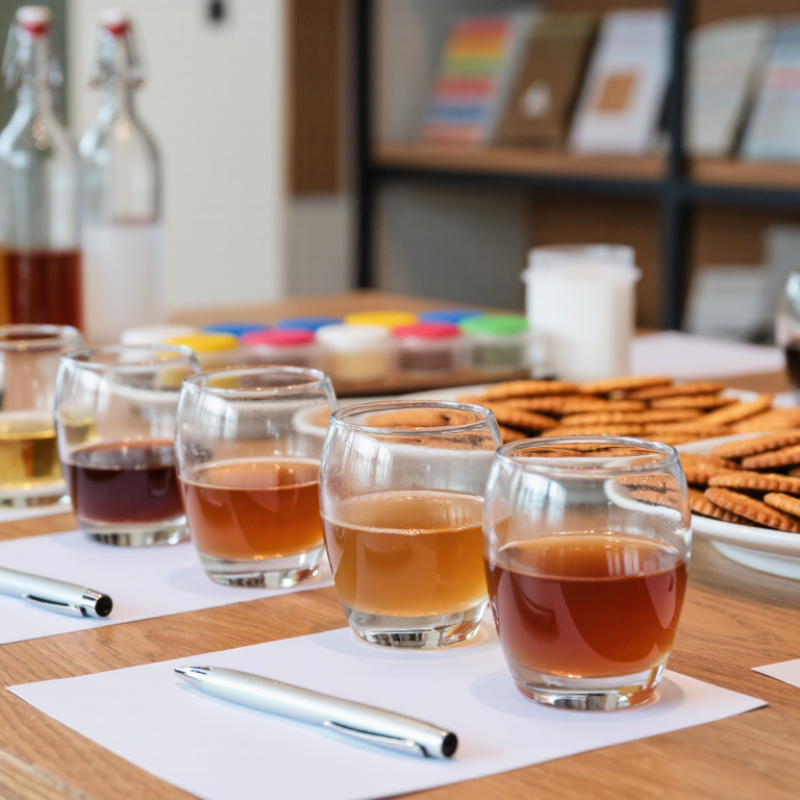
A careful comparison starts with samples made to the same specification. Ask suppliers for ingredient details, batch records, storage guidance, and available quality documentation. Then test samples in your own recipe, using consistent portions and preparation. Record the first impression, aftertaste, aroma, and flavor after realistic storage. That matters. A bright note on day one may become dull weeks later. Request repeat samples from separate batches, too; one excellent sample cannot prove consistent supply. Review how the supplier handles questions and explains variation. Clear, specific answers are more useful than broad promises. No shortcut.

There is a limitation worth admitting: sensory judgments differ between people, and a small tasting panel cannot predict every customer’s preference. Still, a simple, documented test is stronger than choosing by price or a polished brochure. Compare results against your target taste, production needs, and evidence from the supplier. Some details may remain uncertain until a larger trial. That is not a failure; it is a reason to test carefully before making a long-term decision.
Which China Supplier Offers the Best Lasting Taste?

What “Lasting Taste” Means in Food and Beverage Sourcing

Which China Supplier Offers the Best Lasting Taste?

What “Lasting Taste” Means in Food and Beverage Sourcing

“Lasting taste” is more than a strong first sip or bite. It describes how flavor develops, how long it remains, and whether the finish stays pleasant. A citrus drink, for example, may begin bright but turn bitter after a few seconds. That matters. Buyers should assess aroma, sweetness, acidity, and aftertaste separately, then check whether those qualities hold across batches. In the IFIC 2024 Food & Health Survey, 85% of U.S. respondents said taste was important when choosing food and beverages. The finding signals why flavor consistency deserves attention during sourcing.

A practical supplier review uses the same preparation method, serving temperature, and tasting interval for every sample. Record the first impression, the flavor after several seconds, and any lingering bitterness or dryness. ISO 13299:2016 offers guidance for establishing sensory profiles, which can help teams describe samples consistently. Taste can fade. Compare production batches, not just polished samples, and ask how ingredient changes affect the finish. One caveat: a longer aftertaste is not automatically better. I would question a sample that stays intense but feels harsh. Suppliers should provide clear specifications and batch records, while buyers verify flavor through repeated tastings under realistic conditions.
How Ingredients and Production Shape Flavor Retention

A product’s lasting taste begins with its ingredients, not just its recipe. In seasonings, tea blends, and flavored powders, freshness and particle size can affect how quickly aroma appears and how long it remains. Ingredients with delicate aromatic compounds may lose character during prolonged storage or excessive heat. Fats can also develop stale notes when exposed to oxygen. A supplier’s sourcing records, storage conditions, and incoming-material checks offer useful clues, though paperwork alone cannot prove good flavor.

Production matters just as much. Grinding creates more exposed surface area, which can speed aroma loss; controlled processing and well-sealed packaging help limit it. Ask suppliers how they manage temperature, moisture, and batch consistency. Small differences matter.

Tips: Request samples from more than one production batch. Compare them in the same recipe, after the same storage period. Note aroma, aftertaste, and any fading.

Taste tests are imperfect. One person may prefer a sharper opening, while another values a mellow finish. For a fair comparison, use consistent serving sizes and record observations at set intervals. Check whether the supplier can provide clear batch specifications and retain samples for follow-up testing. A strong result should hold up beyond the first sip or bite, but no single test captures every customer’s preference.

Which China Supplier Offers the Best Lasting Taste? - How Ingredients and Production Shape Flavor Retention

Evaluation Dimension What to Check with the Supplier How It Can Affect Flavor Retention Useful Evidence or Test
Ingredient freshness and consistency Ask for ingredient specifications, harvest or production dates where applicable, lot traceability, and controls for incoming materials. Freshness and natural variation can influence aroma, taste intensity, and batch-to-batch consistency. Some aroma compounds also change during storage. Review lot records and compare retained samples from multiple production batches using the same sensory protocol.
Ingredient composition Request a complete ingredient declaration and product-specific specifications for flavor-bearing ingredients, oils, extracts, or seasonings. The type and proportion of ingredients determine the flavor profile. A formulation change may alter both initial taste and how flavor develops over time. Compare approved formulation records and conduct blind sensory checks on samples made to the same specification.
Heat exposure during production Ask which heating steps are used, how time and temperature are monitored, and whether the process is consistent between batches. Heating can create desirable cooked flavors, but it can also drive off some volatile aroma compounds or change heat-sensitive ingredients. Review process-control records and compare aroma and taste before and after the intended storage period.
Drying and moisture control Request product-specific moisture or water-activity specifications and the method used to measure them. Moisture conditions can affect texture, chemical reactions, and storage stability. Water activity below 0.60 generally prevents microbial growth, but does not by itself guarantee flavor retention. Check batch test results from a calibrated moisture analyzer or water-activity meter, as appropriate for the product.
Grinding or particle size For powders or ground ingredients, ask for the particle-size specification and how it is monitored. Grinding increases exposed surface area. Depending on the ingredient and packaging, this can speed aroma loss or oxidation, while also changing how quickly flavor is released. Review particle-size test results and assess flavor in the finished product, not only in the raw ingredient.
Oxygen and light protection Ask for packaging material specifications, closure details, and whether the pack limits exposure to oxygen and light. Oxygen can contribute to oxidation of susceptible ingredients, including some fats and aroma compounds. Light can also degrade certain sensitive components. Request packaging barrier data where relevant and check seal integrity and sensory quality after storage in the intended pack.
Packaging and storage conditions Confirm the recommended storage temperature, humidity, shelf life, and whether the product is protected from moisture and heat during transit. Heat, moisture, oxygen, and long storage can alter flavor. The relevant risks depend on the product formulation and packaging. Request product-specific shelf-life data and evaluate samples under realistic storage and shipping conditions.
Flavor consistency between batches Ask about batch-release checks, retained samples, corrective actions, and controls for ingredient or process changes. A lasting taste is useful only if the product delivers a consistent flavor profile from shipment to shipment. Compare coded samples from different lots with a documented sensory panel or an agreed buyer–supplier acceptance test.

Selection note: There is no single best supplier for every product. Compare suppliers using the same product specification, packaging, storage period, and sensory test; flavor-retention requirements vary by ingredient and application.

Which Supplier Qualities Support Consistent Taste

A supplier’s promise of lasting taste means little without repeatable controls. Look for written specifications covering raw-material origin, moisture, particle size, and storage conditions. These details can affect aroma and flavor from one shipment to the next. Ask how each incoming lot is checked and whether retained samples are available for comparison. Good records make a taste change easier to trace.

Consistency also depends on people and process. A capable supplier should explain how production settings are monitored, how equipment is cleaned, and how deviations are handled. Request samples from different production lots, not just one polished sample. Compare them under the same conditions, using the same preparation time and water temperature where relevant. Small differences matter. Taste can drift. A supplier may still miss a batch, so clear complaint procedures and timely corrective actions matter too. I would not judge consistency from a tasting alone; documentation and follow-up deserve equal weight.

Tips: Keep a simple tasting log with the lot number, date, aroma, flavor, and aftertaste. Store samples in sealed containers away from heat and sunlight. If two lots differ, repeat the test before drawing a firm conclusion.

Which China Supplier Offers the Best Lasting Taste?

Supplier qualities that support consistent taste

Consistent raw-material specifications, controlled processing, careful blending, and proper storage can help preserve a product’s flavor over time. Scores shown are illustrative ratings on a 0–5 audit scale, not measured results for specific suppliers; assess suppliers using documented records and product testing.

How to Compare Samples for Flavor Longevity

Which China Supplier Offers the Best Lasting Taste?

How to Compare Samples for Flavor Longevity

A vivid first sip does not guarantee a flavor will last. Compare supplier samples with the same recipe, serving temperature, and portion size. Record the flavor at 0, 30, 60, and 120 seconds after tasting. Note what remains, not just how strong the first impression feels. The World Coffee Research Sensory Lexicon describes 110 flavor attributes, offering a useful vocabulary for consistent notes, even when evaluating products beyond coffee. ISO 13299:2016 also outlines methods for building sensory profiles. Use clear descriptors such as citrus, toasted, or floral instead of “good.”

Tips: Taste samples blind. Rinse with water between samples, and keep the tasting order consistent. Ask several trained tasters to score intensity at each time point. A simple table can reveal whether a supplier’s sample fades quickly or leaves a balanced finish.

Repeat the test on another day. Small differences in preparation can distort results, and one tasting is not enough to rank suppliers confidently. Track both persistence and aftertaste quality: a flavor that lingers too long may turn bitter or dull. Some notes are hard to describe precisely; that uncertainty should stay in the record, not be forced into a confident score. When comparing China suppliers, request the same sample specification and production details, then compare results against your own product requirements.

How to Select a China Supplier for Lasting Taste

A supplier’s sample can taste impressive at first, then fade quickly in a finished product. When selecting a China supplier for lasting taste, test the ingredient in the recipe and serving conditions you actually plan to use. Keep the sample sealed, follow the same preparation steps, and compare aroma and flavor immediately, then again after several minutes. Small differences matter.

Ask how the supplier controls raw materials, production batches, and storage. Request clear specifications and batch records, then check whether later samples match the first one. A steady flavor often depends on consistent sourcing and careful handling, not simply a bold initial taste. Ask how the product responds to heat, moisture, or time in packaging. Get specific answers.

One tasting is not enough. It is easy to overrate a strong first sip; that is a mistake worth checking. Taste samples on different days, and invite more than one person to give feedback. Preferences vary, and no supplier can promise that every customer will describe “lasting taste” the same way. Still, clear documentation, repeatable samples, and honest answers make a supplier easier to evaluate. If a detail remains unclear, pause before placing a large order.