Inquiry
Form loading...
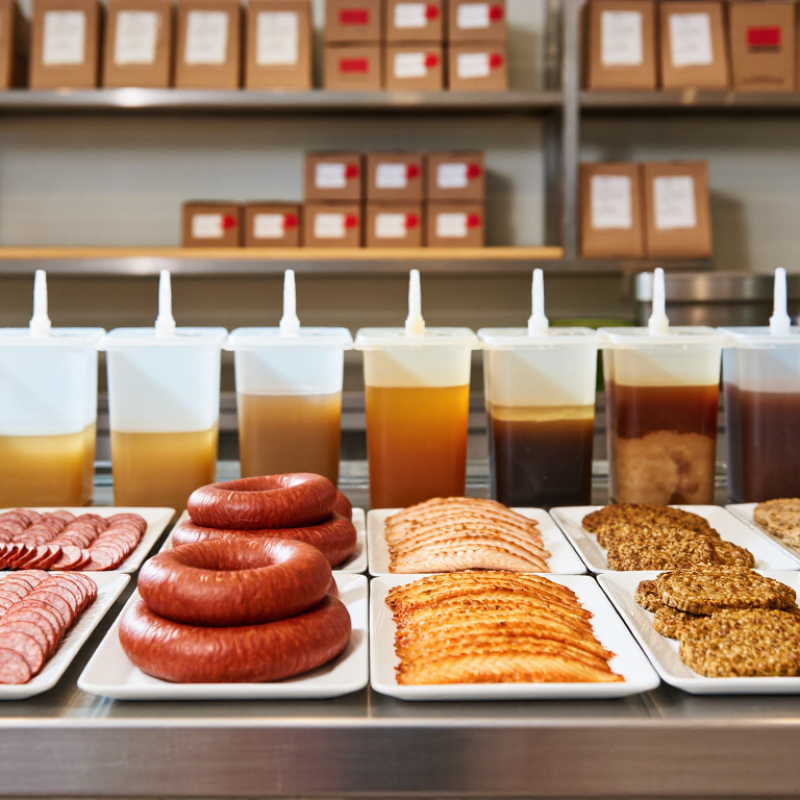
Smoke Stabilization is becoming an important purchasing consideration for food manufacturers seeking dependable smoke flavor and color. Global buyers may compare liquid smoke, smoke condensates, and application-ready blends for products such as sausages, sauces, seafood, and plant-based foods. The right option depends on more than aroma. Process compatibility matters.
A useful supplier review starts with clear product specifications. Buyers should examine ingredient declarations, intended applications, recommended dosage, packaging formats, and available quality documentation. Ask how each solution performs in a real production setting. A small trial can reveal uneven color, a sharp aftertaste, or changes during heating that a brochure may not show. Details matter.
Consistency is essential. Batch-to-batch variation can affect both flavor and appearance, especially when production runs are large. Reliable suppliers should explain their quality controls and provide current technical information for evaluation. Buyers should also confirm storage conditions, shelf life, transport requirements, and whether the product suits their equipment. One detail is easy to miss: a formulation that works well in a test kitchen may behave differently on a continuous processing line.
Regional preferences also shape purchasing decisions. Some markets favor a stronger smoke note; others prefer a lighter profile that lets the base ingredient stand out. There is no universal solution. This guide explores practical Smoke Stabilization options, selection criteria, and supplier questions for global buyers. It also recognizes a limitation: product data can narrow the field, but careful testing remains necessary before a purchasing decision.
2026 Top Smoke Stabilization Solutions for Global Buyers
Smoke stabilization controls three practical variables: flavor, color, and shelf life. It does not simply mean adding more smoke. Phenolic compounds support aroma and surface protection, while carbonyls influence the familiar golden-brown color. Results change with temperature, humidity, wood profile, product fat, and exposure time. The boundary is not always neat.
For buyers, shelf-life claims need measurable evidence. FAO’s State of Food and Agriculture 2023 reported that 13.2% of food was lost globally between harvest and retail in 2021. Controlled smoking may reduce quality losses, but it cannot replace hygiene, refrigeration, or suitable packaging. Measure water activity, pH, residual oxygen, color values, and microbial stability. Codex General Principles of Food Hygiene, revised in 2022, supports preventive controls and documented validation. A practical concern remains: many suppliers present attractive color as proof of protection. It is not.
Tips: Request pilot-batch data under realistic storage conditions. Compare smoke intensity, surface color, texture, and sensory acceptance after opening. Check whether the proposed process fits destination-country limits and labeling rules. Use barrier packaging and verify cold-chain performance. Shelf-life models help, but real-time testing catches surprises. Small deviations can matter.
I have found that the best specifications define acceptable ranges, not one perfect smoke profile. Some products become harsh before they become safer. Others lose color quickly after slicing. Buyers should therefore approve the complete process, not only the smoke ingredient.
| Solution | How It Stabilizes the Product | Flavor and Color Effects | Shelf-Life Contribution | Best-Fit Applications | Buyer Checks |
|---|---|---|---|---|---|
| Traditional hot smoking | Combines smoke deposition with heat treatment. The required time and product temperature depend on the food, process, and food-safety validation. | Typically produces a pronounced smoke aroma and a golden-to-brown surface; color varies with wood, process conditions, and product composition. | Heat can reduce microorganisms when the process is validated. Smoking alone does not establish a safe shelf life; cooling, handling, and storage remain important. | Cooked fish, meat, poultry, and selected plant-based foods. | Verify the validated time-temperature process, smokehouse uniformity, cooling controls, and applicable food-safety requirements. |
| Traditional cold smoking | Deposits smoke at temperatures that generally do not cook the product. It must be paired with appropriate curing, fermentation, drying, or other validated controls where needed. | Can provide a layered smoke profile and surface color while retaining a less-cooked texture than hot smoking. | Smoke deposition by itself is not a reliable pathogen-kill step or a guarantee of extended shelf life. Product formulation and validated preservation controls are essential. | Cured fish, cured meats, and specialty products made under controlled processes. | Review hazard analysis, curing and drying parameters, process monitoring, and cold-chain requirements. |
| Liquid smoke (smoke condensate) | Smoke is generated, condensed, and processed into a liquid ingredient that can be applied by dipping, spraying, blending, or other suitable methods. | Allows repeatable smoke intensity and can deliver a consistent surface color. The result depends on the condensate specification, dose, application, and food matrix. | Some smoke constituents can contribute antimicrobial or antioxidant effects, but performance varies. It should not replace validated preservation or storage controls. | Processed meats, fish, sauces, snacks, and products requiring controlled smoke flavor. | Check permitted-use status, ingredient and allergen labeling, specification documents, application uniformity, and target-market rules. |
| Filtered or refined smoke condensate | Processing removes or reduces selected insoluble materials and constituents, producing a more controlled ingredient profile. The degree of refinement depends on the product specification. | Can support a cleaner, more consistent smoke profile and controlled color development; sensory outcomes should be confirmed in the finished food. | Any preservation effect depends on composition, application, and the product. It is not a substitute for validated heat treatment, refrigeration, or other controls. | Products needing standardized smoke character or a defined condensate specification. | Request compositional and contaminant specifications, food-grade documentation, permitted-use confirmation, and application guidance. |
| Direct smoke application | Smoke is applied to the product surface in a chamber or suitable processing system, with exposure controlled by the production recipe and equipment. | Offers a familiar smokehouse character. Surface color and flavor can vary with airflow, humidity, smoke density, product loading, and exposure time. | Smoke compounds may contribute to surface protection, but shelf-life outcomes require product-specific testing and validated process controls. | Meat, fish, cheese, and other foods compatible with smoke-chamber processing. | Assess chamber airflow, batch consistency, process monitoring, cleaning, emissions management, and throughput. |
| Smoke plus validated packaging and cold chain | Combines a smoke process with suitable packaging, hygienic handling, and temperature control. Vacuum or modified-atmosphere packaging must be selected and validated for the specific product. | Packaging can help preserve the intended aroma and appearance by limiting exposure to air; the smoke process determines the primary smoke character. | May help manage oxidation and spoilage when correctly designed, but packaging is not a kill step. Refrigeration, safety validation, and clear use-by controls remain necessary. | Chilled smoked fish and meats, sliced products, and distribution-sensitive foods. | Validate packaging atmosphere, seal integrity, storage temperature, shelf life, and hazards associated with reduced-oxygen packaging. |
| Smoke with complementary curing or drying | Uses smoke alongside validated formulation or moisture-reduction controls. Salt, curing agents, fermentation, or drying are product-specific measures and must comply with local regulations. | Can create a more complex flavor and characteristic color. Formulation and drying conditions also affect texture, saltiness, and appearance. | Multiple validated hurdles can improve stability, but the required controls depend on the food and target hazard; no single ingredient guarantees safety. | Cured or dried meats, selected fish products, and fermented specialty foods. | Confirm ingredient limits, process validation, water-activity or other relevant product criteria, labeling, and destination-market compliance. |
Definition: Smoke stabilization is the controlled use of smoke processing or smoke-derived ingredients to shape flavor and color and, in some products, contribute to preservation. Its effect on shelf life is product- and process-dependent; it does not replace food-safety validation, hygienic handling, or required temperature control.