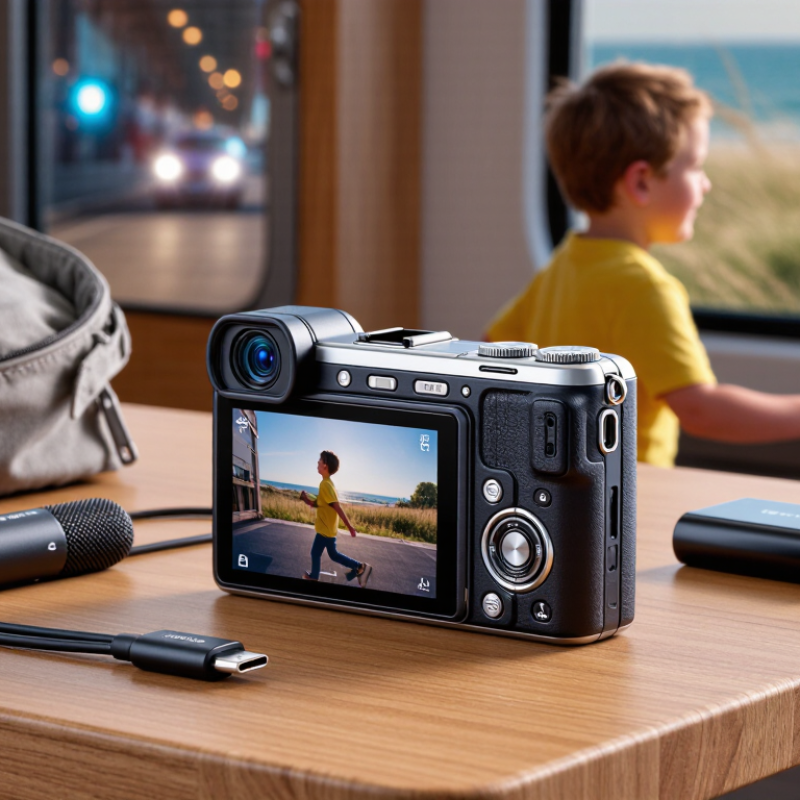
Choosing a Portable Hd Digital Camera in 2026 requires more than counting megapixels. A compact body may fit inside a jacket pocket, yet poor stabilization can ruin evening footage. A bright lens, reliable autofocus, strong battery life, and usable microphone input often matter more. Think about real scenes: a child running across a dim room, a windy beach, or a moving train window.
The Camera and Imaging Products Association (CIPA) reported approximately 8.5 million digital camera shipments worldwide in 2024, an increase of about 11% from 2023. This recovery suggests renewed interest in dedicated cameras, especially among creators seeking better control than smartphones provide. Chase Jarvis, photographer and CreativeLive founder, famously said, “The best camera is the one that’s with you.” That principle remains practical. A camera left at home has no value during an unexpected sunset.
This guide examines sensor size, 4K recording, image stabilization, storage formats, charging speed, and weather protection. It also considers operating comfort, because tiny buttons can become frustrating during fast shooting. Independent testing should support every major claim, while manufacturer specifications require careful checking. Marketing language can sound impressive.
There is no perfect model. A lightweight camera may sacrifice battery capacity. A powerful zoom may add noticeable weight. Some conclusions will remain debatable, and personal shooting habits can change the result. The right Portable Hd Digital Camera should match your hands, your subjects, and your daily carrying habits. It should work when the moment arrives. That is the real test.
How to Choose a Portable HD Digital Camera in 2026?
Define Your Portable HD Digital Camera Needs
Start with the scene, not the specification sheet. Will you record family trips, classroom demonstrations, outdoor walks, or short interviews? Each setting demands different performance. A compact camera for daylight travel may need simple controls and a lightweight body. An interview camera needs reliable autofocus, clean audio input, and stable framing.
CIPA’s 2024 statistics recorded roughly 8.5 million digital camera shipments worldwide. That figure shows continuing demand, but it does not define your personal needs. Resolution should match your workflow. Full HD remains practical for social clips and standard displays. Choose 4K when you crop footage, preserve detail, or edit for larger screens. Higher resolution also consumes more storage and battery power.
Check the details people often ignore. Measure the camera with its battery installed. Test whether it fits your smallest bag pocket. A useful field test includes a five-minute handheld recording, an indoor clip, and a quick battery check. Notice button placement. Small controls can become frustrating in cold weather or low light.
Audio matters greatly. A clear voice can rescue ordinary video. Built-in microphones may struggle near traffic or strong wind. Consider a model with adjustable input levels, if your work requires interviews. Review storage compatibility and charging time. One imperfect assumption is common: “portable” does not always mean comfortable. A camera can be small yet tiring after twenty minutes. Choose the camera around your real habits, not an imagined perfect weekend.

“HD” can describe video resolution, not overall image quality. Full HD records 1,920 × 1,080 pixels, while 4K records 3,840 × 2,160. A 4K camera preserves finer detail in distant signs, hair, and moving water. However, resolution alone can mislead. A weak lens or noisy sensor may produce softer footage than a well-designed Full HD camera. CIPA’s 2024 industry statistics reported approximately 8.5 million digital still cameras shipped worldwide, showing continued interest in dedicated imaging devices.
Sensor size deserves closer attention. A 1/2.3-inch sensor keeps a camera small but often struggles in a dim café or at dusk. A one-inch sensor gathers more light and usually creates cleaner shadows. APS-C sensors can deliver stronger detail and natural background blur, but they increase body size and weight. The trade-off is real.
Image quality also depends on processing, autofocus, and lens sharpness. DXOMARK’s camera testing separates exposure, texture, noise, autofocus, and stabilization, which is more useful than counting megapixels alone.
I would test sample files at 100 percent, not only on a bright phone screen. Look for skin tones, edge detail, and motion blur. My mistake was trusting impressive 4K footage without checking low-light stills. Portability matters, but a camera left at home produces no images.
A portable camera should feel comfortable after twenty minutes of walking. Check its weight, grip, screen visibility, and pocket fit. Small bodies are useful, but tiny controls can slow you down. I once chose the lightest model and regretted its awkward buttons. A balanced design often matters more than a few saved grams.
Battery life depends on recording quality, screen brightness, temperature, and wireless functions. Test the camera during a realistic outing, not only in a laboratory claim. Carry one spare battery if you record long events. Charging through a common cable is convenient, especially during travel. Still, battery estimates can be optimistic. Your results may differ.
Tips: Use a fast, reliable memory card with enough capacity for high-definition files. A 128GB card may suit casual recording, while frequent 4K shooting needs more space. Check whether the camera supports removable storage and automatic file splitting. Empty cards before important trips. Keep a second card in a sealed case. Also, record a short sample before leaving, then review its sound, focus, and battery drain. That simple test can reveal problems early.
When choosing a portable HD digital camera, inspect its real features rather than its advertising claims. Start with video resolution, frame rates, and image stabilization. A 4K label means little if footage looks shaky or noisy indoors. Check whether the camera records clear sound from several meters away. During testing, film a moving subject near a bright window and in a dim room. I once trusted a high-resolution specification and ignored poor low-light performance. That choice was disappointing. Look for a removable battery, reliable autofocus, and enough storage for longer clips.
Connectivity should match your daily workflow. A USB-C port can simplify charging, file transfers, and external microphone use. Wireless connections are convenient, but pairing may fail in crowded places. Test the camera with your phone before buying it. Can you preview footage quickly? Can you transfer a two-minute video without repeated errors? Some cameras require complicated applications, which can waste time during travel. I prefer simple controls, even when they offer fewer advanced settings.
Ease of use becomes obvious after ten minutes of handling. Buttons should remain reachable while you hold the camera with one hand. A clear screen helps when sunlight hits the display. Menus should use familiar terms and avoid buried recording settings. Try changing exposure, zoom, and stabilization without reading the manual. The camera may feel light at first, yet become tiring after an hour. Carry it around briefly before deciding. Read independent tests, but remember that personal comfort is difficult to measure.
How to Choose a Portable HD Digital Camera in 2026?
Balance Camera Performance, Durability, and Price
A portable HD camera should match your actual shooting habits, not imagined adventures. For travel, check weight, grip comfort, and battery life before chasing advanced specifications. A 1080p camera can produce clear footage in daylight, while a larger sensor usually handles indoor scenes better. Test autofocus near a window and under weak room lighting. Slow focus becomes frustrating quickly.
Durability matters when cameras face rain, dust, or repeated movement. Look for a firm hinge, protected ports, and a screen that does not wobble. Weather resistance helps, but it does not make a camera waterproof. Read the protection details carefully. I once trusted a sealed compartment during light rain and still found moisture near the charging port. My mistake was assuming “resistant” meant unlimited protection.
Price should include spare batteries, memory cards, and possible repairs. A cheaper camera may lose value if its battery drains after one hour. Compare real recording time, not only the advertised capacity. Stabilization is useful for walking shots, but digital stabilization can crop the image. That trade-off is easy to overlook. Before buying, record a short moving clip and review it on a larger screen. Small camera displays hide noise, shaky edges, and soft detail. A modest model may be the wiser choice when its controls feel natural and its construction inspires confidence.
Balance camera performance, durability, and price with a weighted decision score.
Scores are based on typical portable camera categories, considering video resolution and autofocus, body protection and weather resistance, battery practicality, portability, and total purchase cost. A higher value indicates a stronger overall balance for everyday travel and outdoor use.